Art by Susan Sternau, Visiting California
Painting Palm Trees
Jul
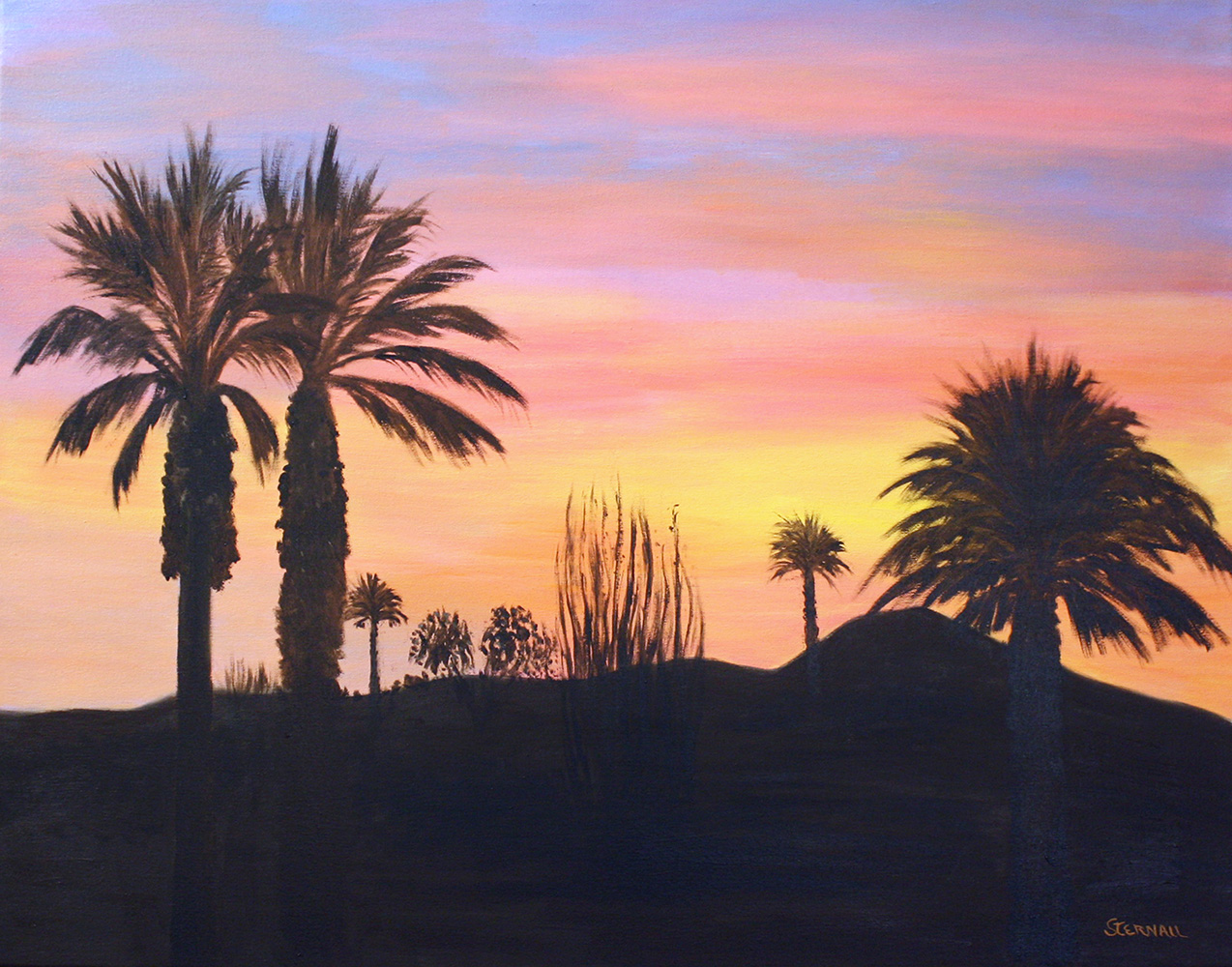
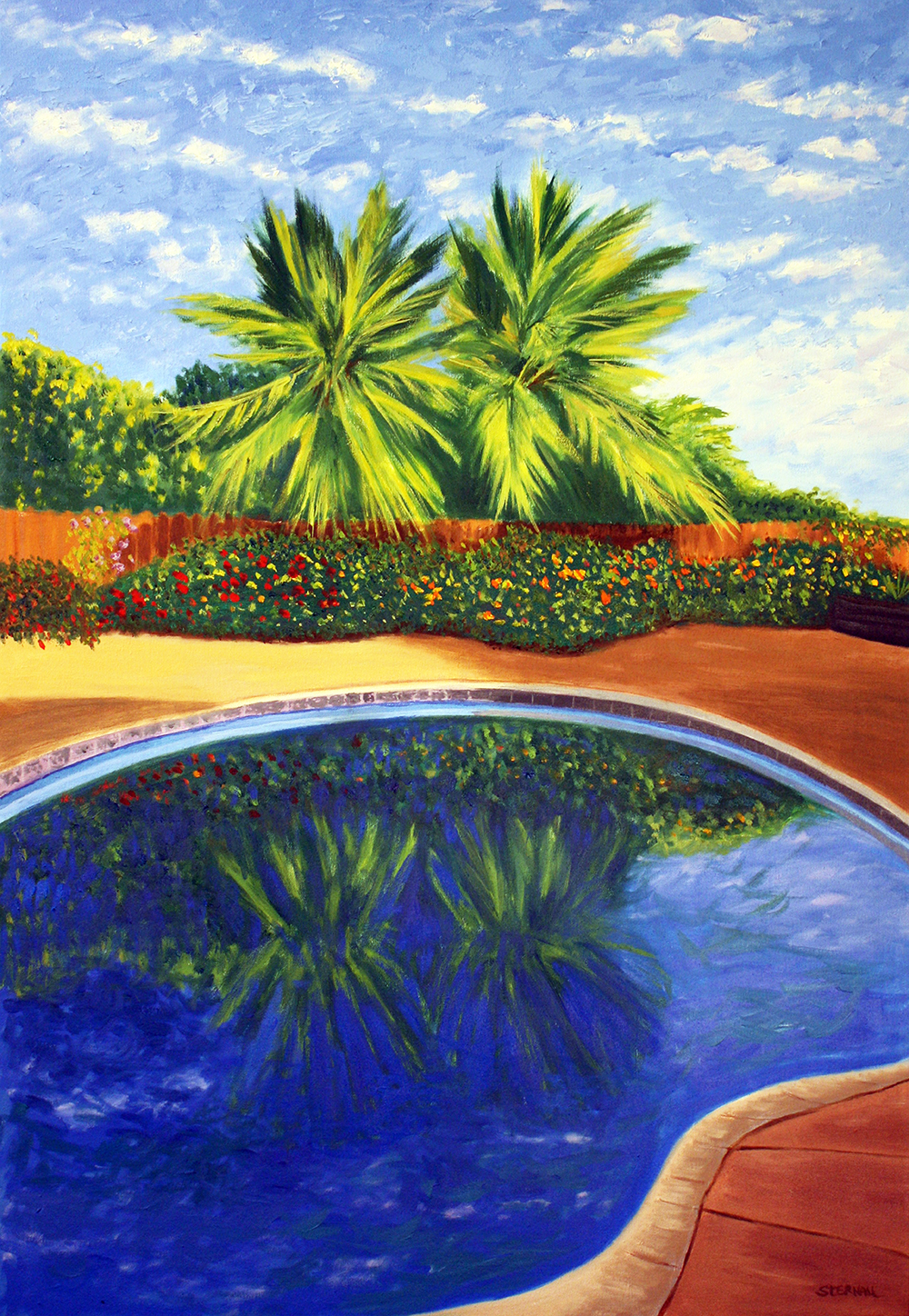
There is something unmistakably poetic about a palm tree. Its shape is simple yet iconic. Palms are tall, graceful, and reach toward the sky with crowns of leaves that move like brushstrokes in the wind. As an artist, I see palm trees not just as symbols of the desert, but as living sculptures that capture light, line, and movement in the most elegant ways.
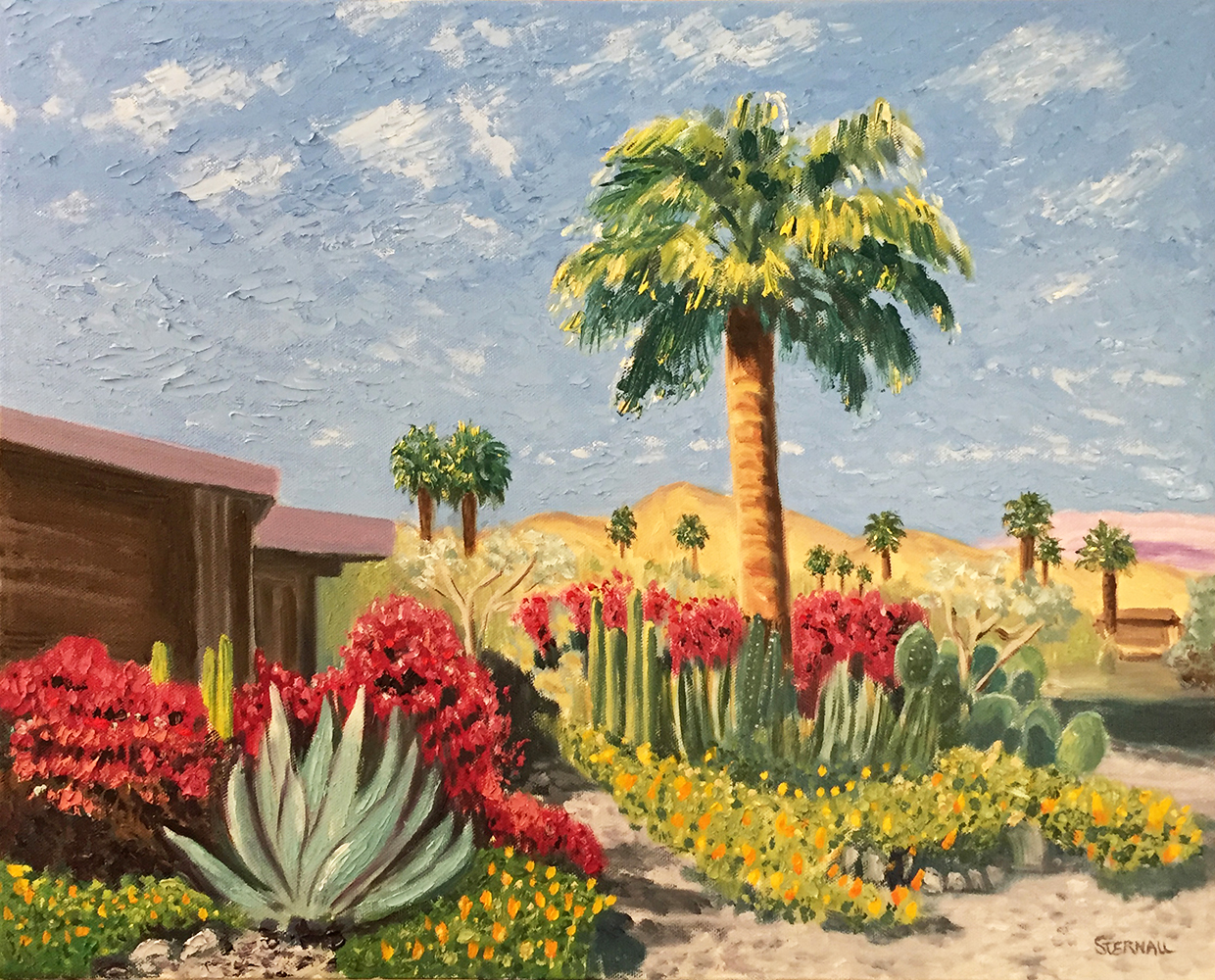
Belonging to the Arecaceae family, palm trees come in many forms—over 2,500 species, in fact. Some stand like columns, with sleek trunks; others curve and twist like they are dancing. Their fronds, whether fan-shaped or feathered, form intricate patterns that change depending on the time of day, season, or angle of the sun.
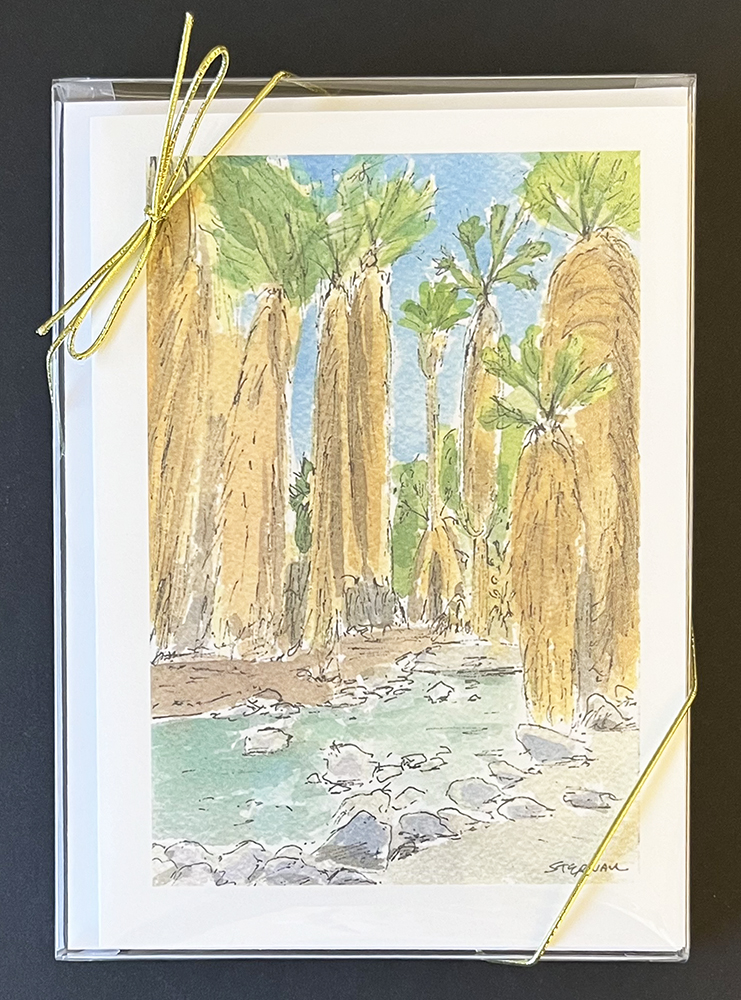
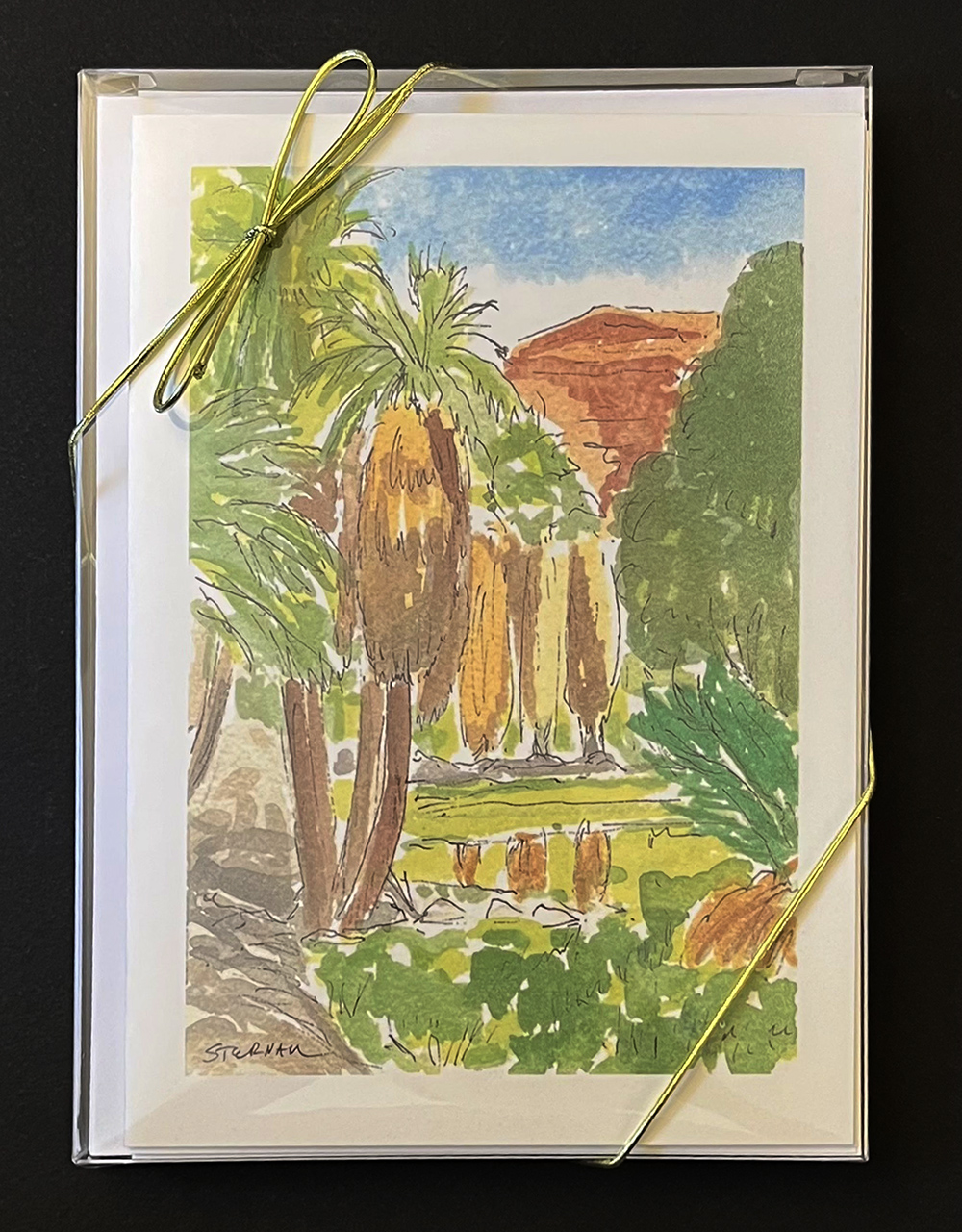
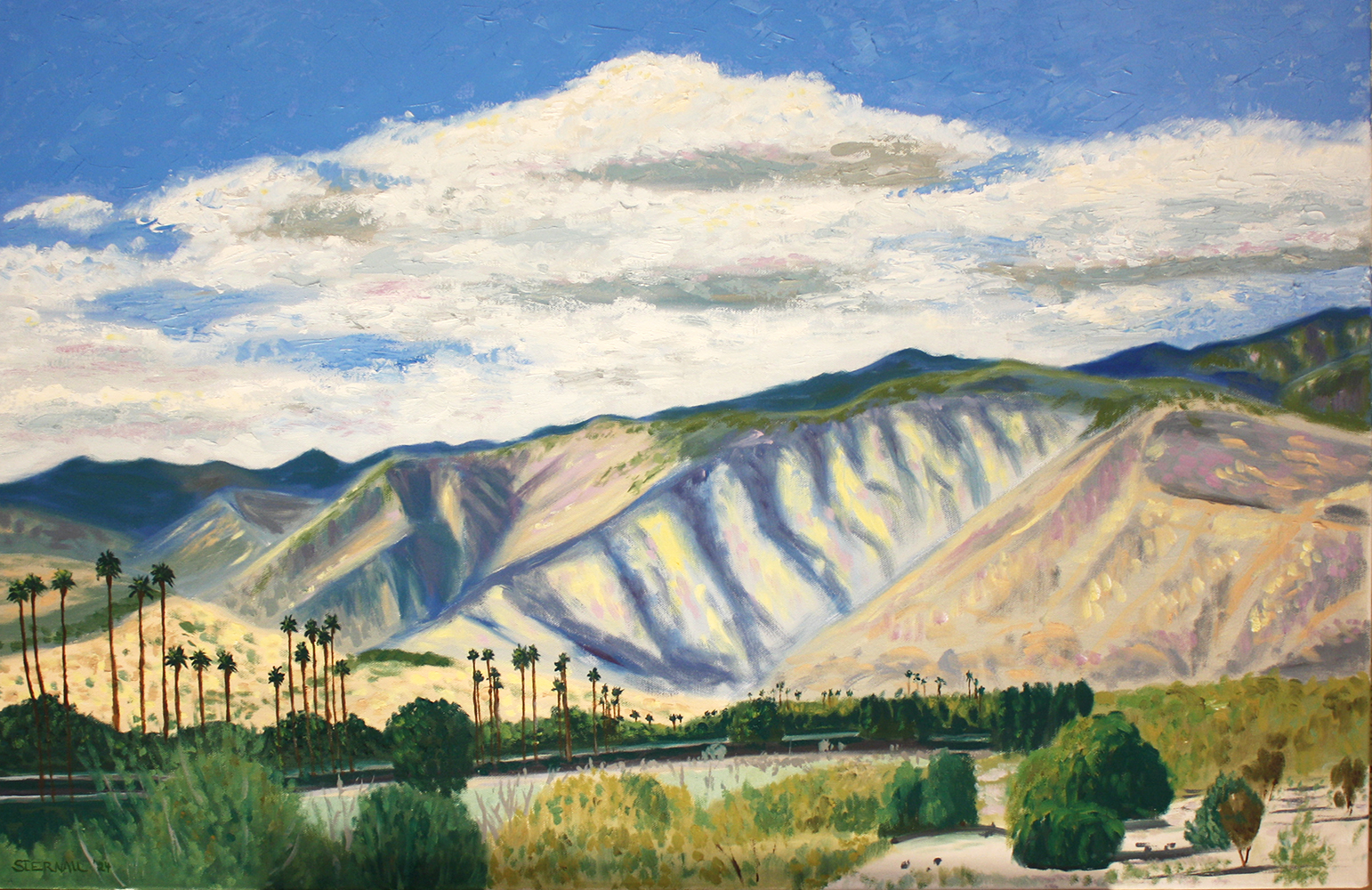
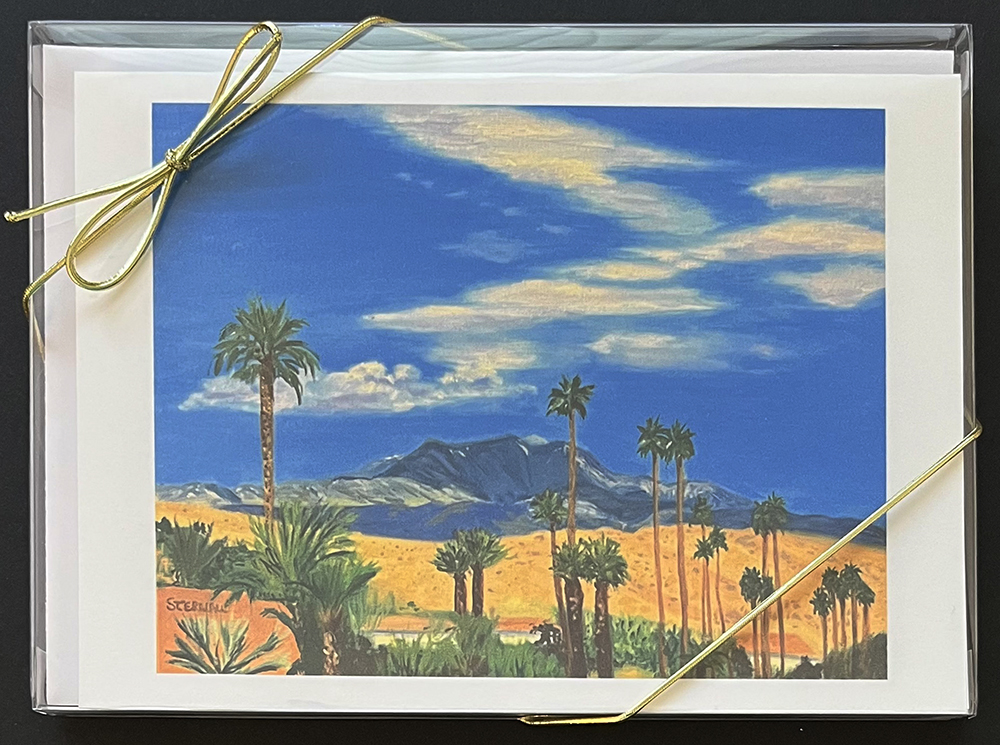
The Coachella Valley in Southern California is home to a majestic native palm, the Washingtonia. These palms create elegant forests along the streams in Indian Canyons, an area long inhabited by the Cahuilla people. Many palms also give back in tangible ways—coconuts, dates, fibers, oils. Their presence supports entire ecosystems and peoples.
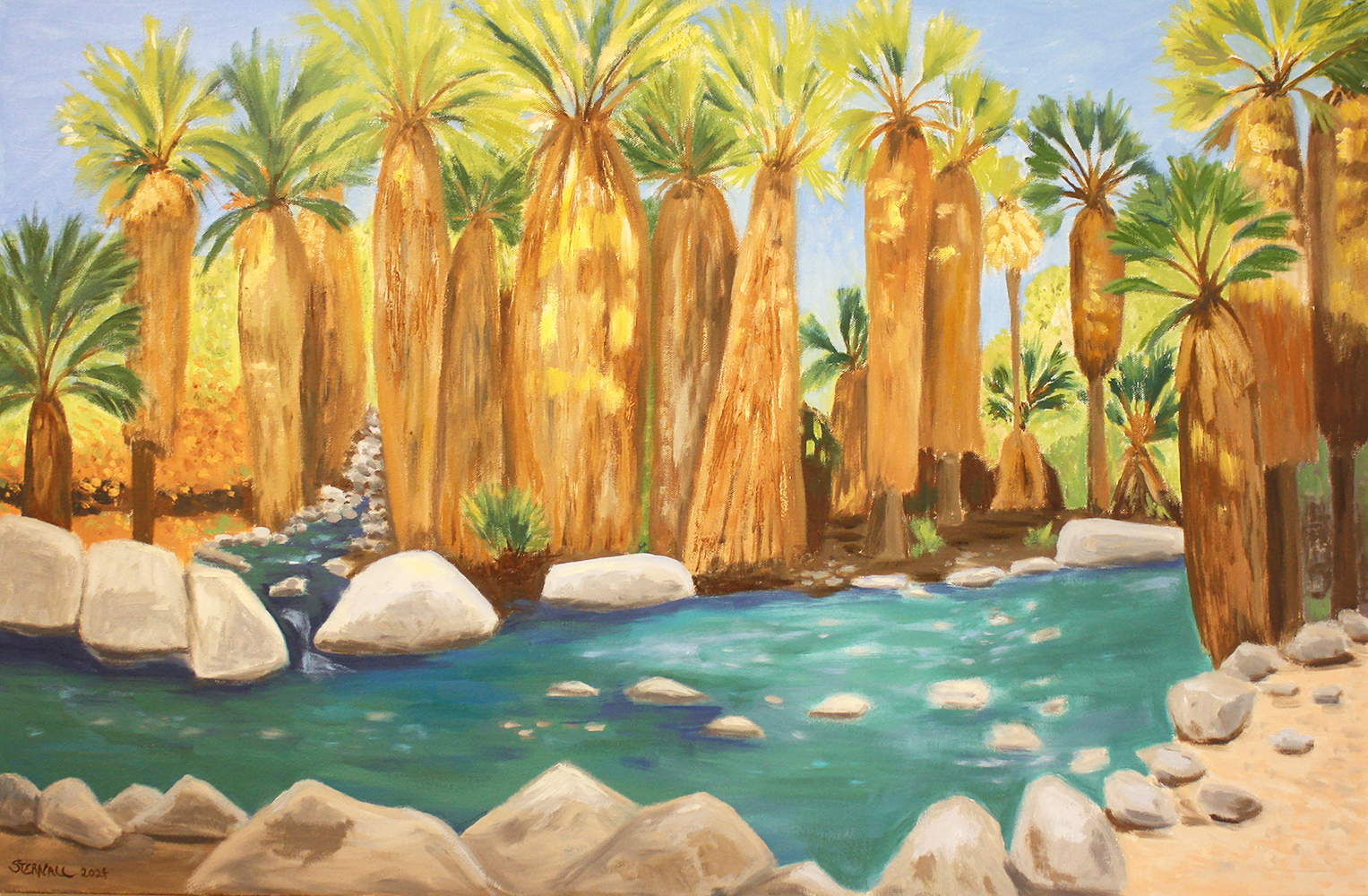
Palm trees may seem simple at first glance, but they’re surprisingly nuanced to paint. Their rhythmic lines, shifting light, and textured fronds offer a dynamic subject for art.
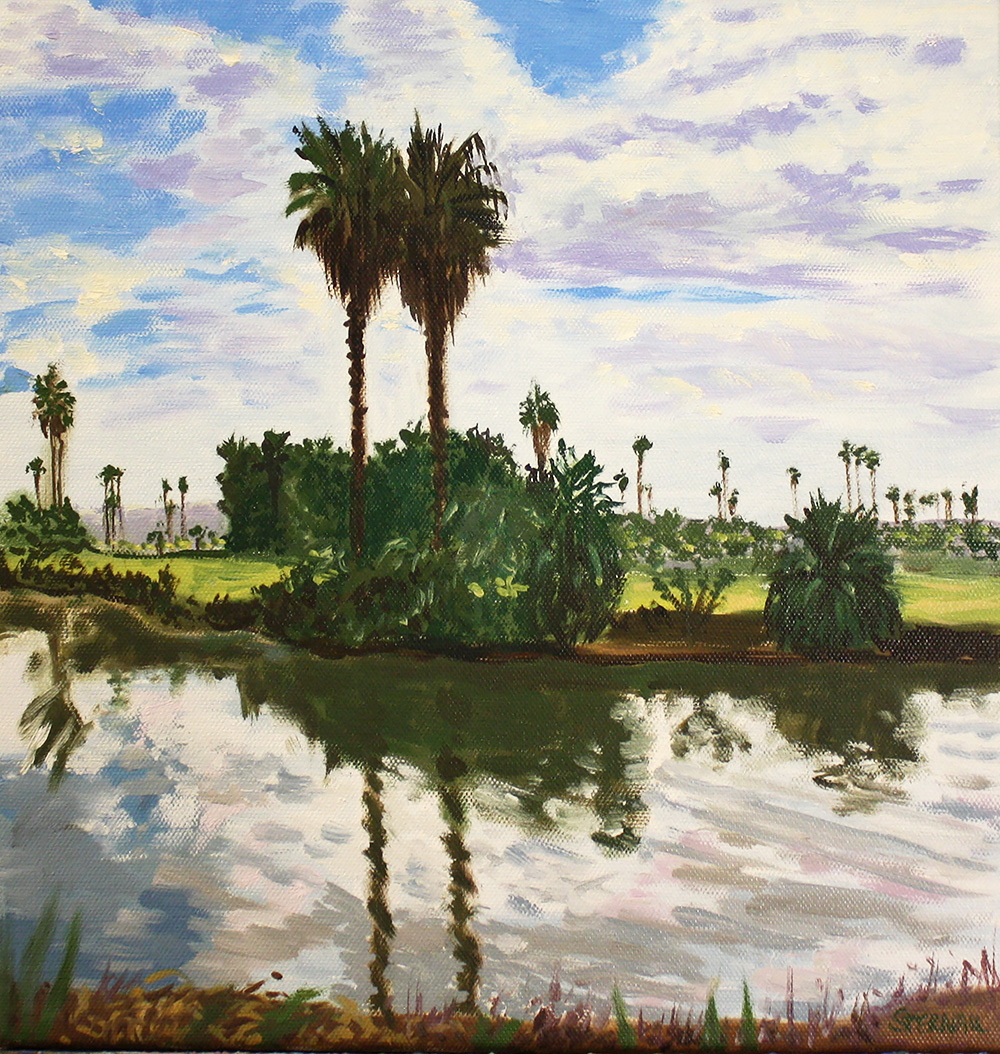
Palm trees carry centuries of cultural and symbolic meaning. In ancient times, they stood for victory, peace, and fertility. Today, they are a visual shorthand for escape, luxury, and calm. To paint a palm tree is to tap into a universal sense of longing and beauty.
As an artist, I find that palm trees offer endless inspiration. They challenge me to observe shape and shadow with care, to capture movement in stillness, and to use negative space boldly. Palms never feel static. They are timeless, yet always in motion. The next time you see a palm tree, whether on a beach, in a garden, or in a painting — pause for a moment, and let it remind you of rhythm, resilience, and grace.